
Last updated November 16, 2026
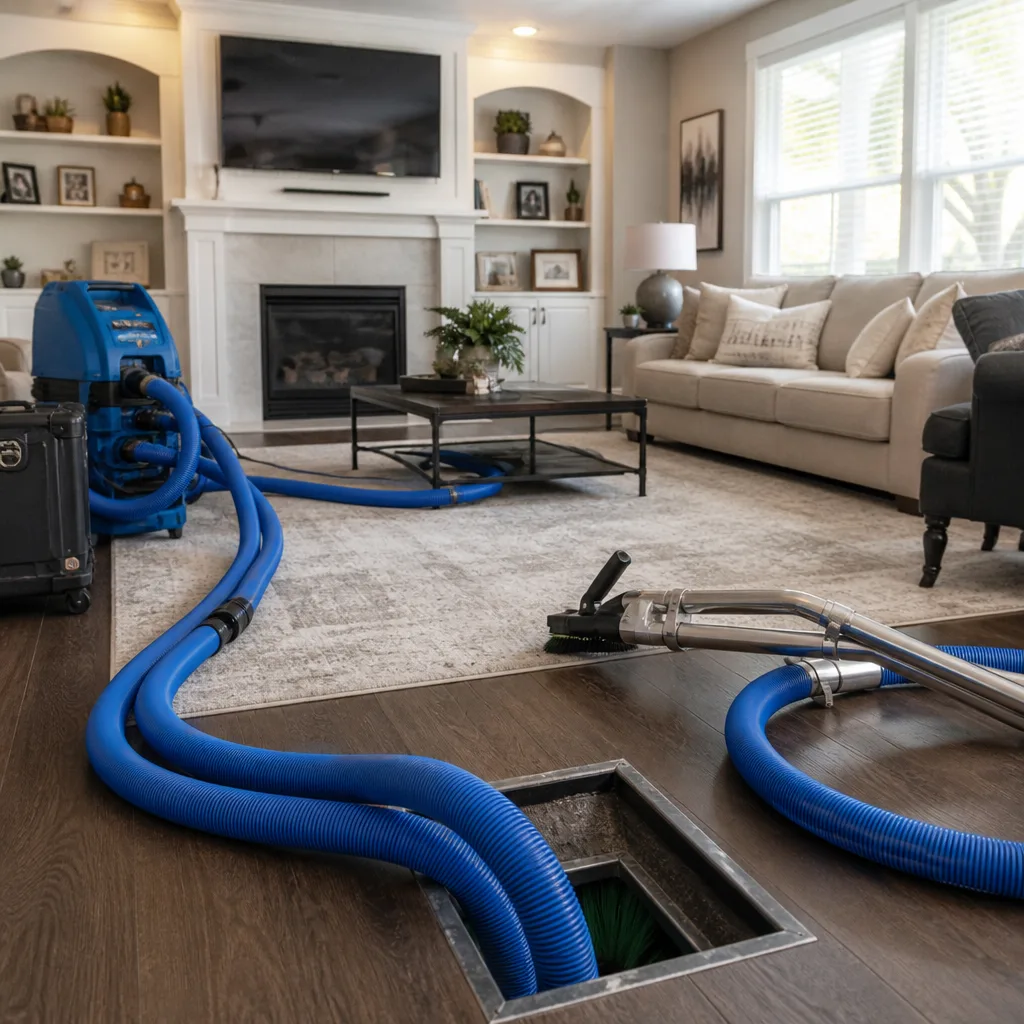 Whole-home duct cleaning
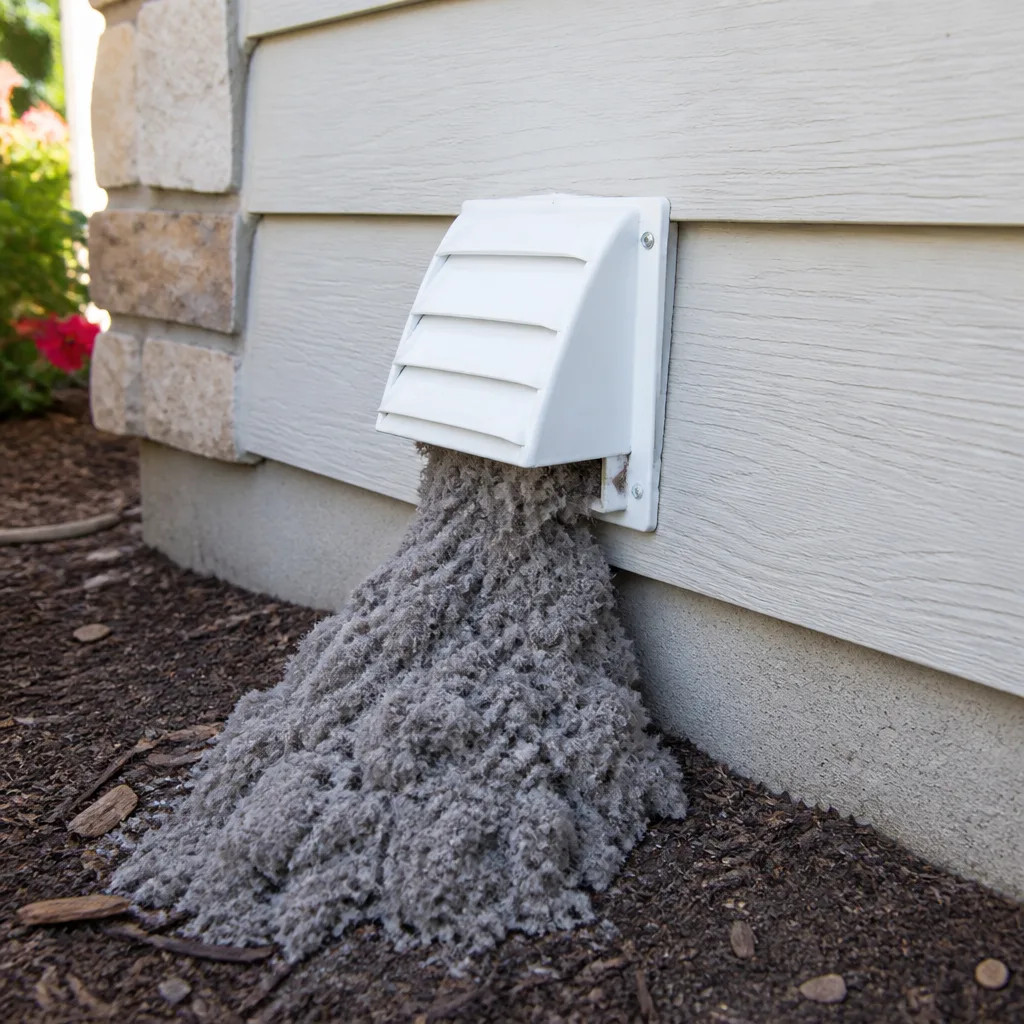 Dryer vent cleaning
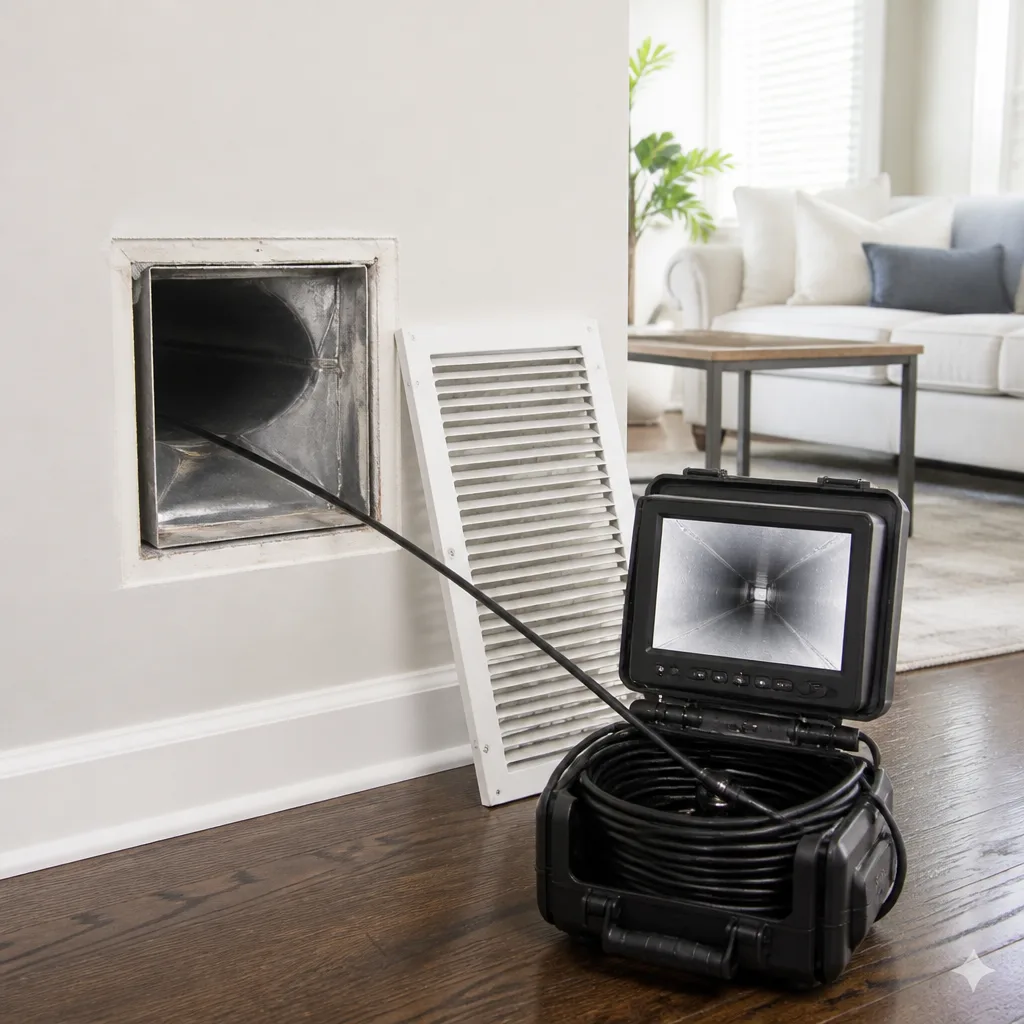 Camera inspection
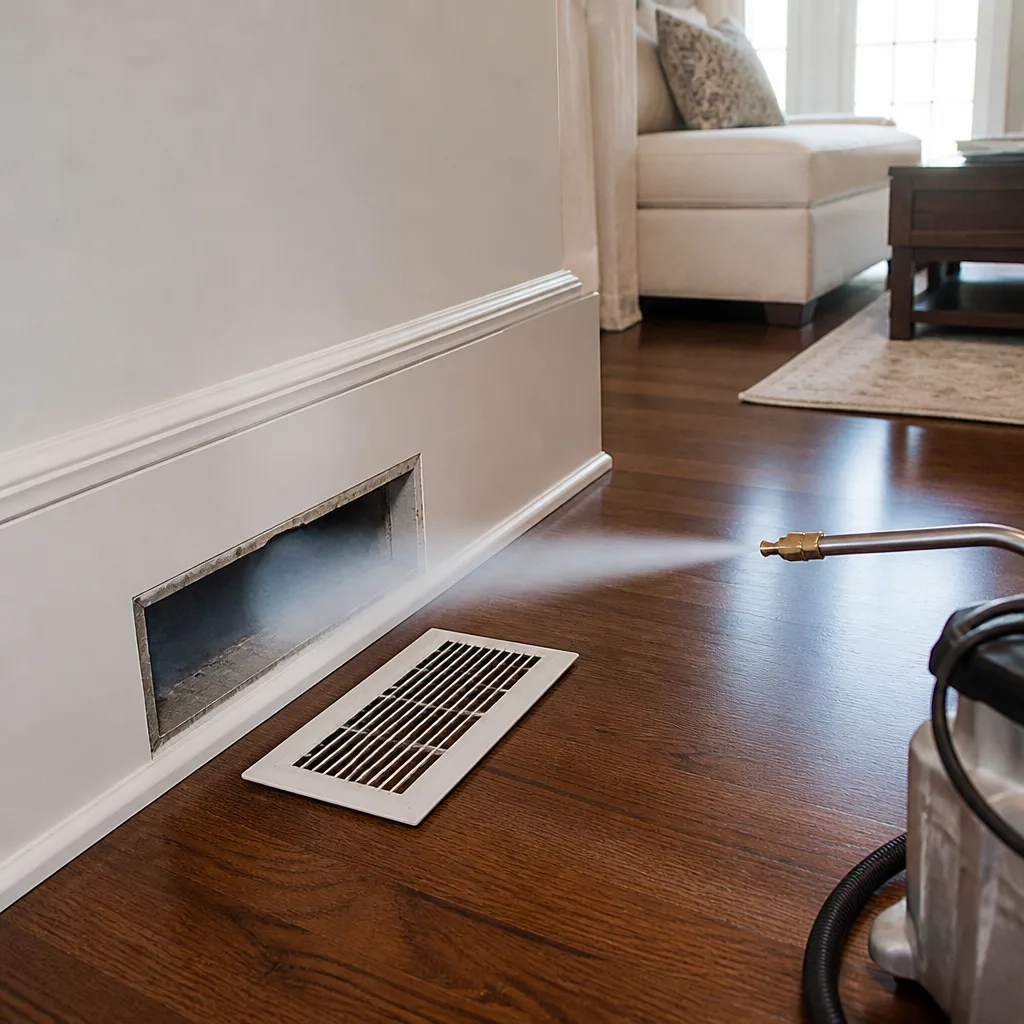 Sanitizing & deodorizing
Whole-system duct and dryer vent check with before-and-after photos - you see exactly what came out of your vents
That "$99 whole-house special" is a bait ad - the real number appears once they are in your hallway, or the "clean" is a shop-vac at the register. We photograph the inside of your ducts before and after instead.
Air Duct Cleaning Cost Breakdown: The Chesapeake Homeowner’s Reference for 2026
Two quotes for air duct cleaning in Chesapeake can arrive on the same day and differ by a factor of four. It’s tempting to assume the higher one is padding its margin, or that the lower one is cutting corners on labor. Neither explanation gets to the heart of it. The real driver is the machine sitting in the driveway. A truck-mounted negative-pressure unit with a dedicated vacuum pump and HEPA filtration costs a contractor a serious investment and can pull a whole-house system into containment in a single pass. A portable shop vac with a spinning brush attached costs a few hundred dollars and redistributes as much dust as it removes. Everything else about the job flows from that piece of equipment. This guide breaks down what you’re actually paying for, what’s realistic to expect in Chesapeake in 2026, and how to compare two quotes without getting lost in per-vent math.
Quick Answer
Typical air duct cleaning in Chesapeake in 2026 runs $350 to $550 for a standard single-story home with an accessible trunk-and-branch system, and $550 to $900 for larger two-story homes, crawl-space systems, or homes with extensive flex duct networks. A whole-system quote should include negative-air containment, rotary brush agitation, access-point creation and sealing, blower and coil inspection, and before-and-after photos of your own ducts. Anything under $200 for a full house is almost always a vacuum-only pass that leaves settled debris undisturbed.
Styles & brands we work with
- Whole-home duct cleaning
- Dryer vent cleaning
- Camera inspection
- Sanitizing & deodorizing
Table of Contents
- What actually makes up the cost of a professional job
- Cost factors unique to Chesapeake homes
- 2026 price ranges by home size and system type
- What per-vent pricing hides
- Add-on services: which are justified and which are upsell
- How to compare quotes apples to apples
- Common mistakes to avoid
- When to call a professional
What Actually Makes Up the Cost of a Professional Job
The price on a duct cleaning quote isn’t a markup on time. It’s a recovery of five distinct cost centers, and a contractor running legitimate equipment has to cover all of them. Understanding what those costs are is the first step to reading a quote accurately.
The five components of a fair quote
- Equipment amortization. A Rotobrush rotary-brush system paired with a Nikro negative-air machine represents a real capital investment, and the machines need maintenance, brushes, hoses and filters replaced regularly. A legitimate operator recovers part of that cost per job. A contractor using a $300 shop vac has almost nothing to recover, which is exactly why their quote looks so attractive.
- Labor hours per square foot. A standard residential system in Chesapeake takes roughly 1.5 to 3 hours of active work depending on the number of trunks, runs and returns. Two technicians are often required on a two-story home because one person can’t manage containment and agitation at the same time. Labor is usually the largest single line in the quote.
- Access point count. Every branch line and trunk that isn’t already accessible gets a cut-in access port, typically a 4-inch or 6-inch hole drilled through the duct wall, used to insert the brush and vacuum, and then sealed with a gasketed plug or mastic. The more access points required, the longer the job. A home with 18 runs takes meaningfully more work than one with 8, and that’s reflected in a fair quote.
- System complexity. A simple trunk-and-branch layout with rigid galvanized duct is fast to clean. A system with multiple trunk splits, double returns, 90-degree elbows tight against joists, or extensive flex duct runs requires more time, more access points, and a more careful technique to avoid tearing the flex liner.
- Containment and filtration. A negative-air setup using Abatement Technologies air-filtration equipment, or an equivalent containment approach, keeps dislodged debris from recirculating into the living space during cleaning. That equipment costs money and takes time to set up and break down. It is not an optional luxury; it’s what separates cleaning from redistribution.
What is not in the quote
A fair quote does not hide a service-call fee, a trip charge, or an “inspection fee” that gets credited toward the job. The written estimate sets the price. If a quote has a teaser line at the top and a list of mandatory add-ons at the bottom, it isn’t a quote; it’s a sales script.
Cost Factors Unique to Chesapeake Homes
Chesapeake homes aren’t identical to homes in Richmond or Northern Virginia, and the duct cleaning cost reflects that. Four features of the local housing stock show up repeatedly on estimates, and each one moves the number.
Crawl space systems
A significant share of Chesapeake homes, particularly in older neighborhoods and in areas built out before the 1990s, run ductwork through a conditioned or semi-conditioned crawl space rather than through an attic. Crawl space systems are harder to access, tend to collect more ground-level debris and moisture, and often have flex duct runs that were added or replaced piecemeal over multiple renovation cycles. Cleaning them requires a technician to work from below, sometimes on hands and knees, and to manage containment carefully so dislodged material doesn’t settle back into the living space above. Expect the labor line on these jobs to run 30 to 50 percent higher than an equivalent attic-run system. We’ve seen this repeatedly on estimates in neighborhoods like Great Bridge and Hickory, where ranch and split-level homes often have long crawl-space trunk runs.
Two-story returns
A two-story home usually has a large central return on the second floor plus a return on the first. Both need to be cleaned, and the second-floor return is often a chase that runs vertically through interior walls. Longer runs, tighter turns, and the need for an extra set of hands all add time. A two-story home with two returns and 15 supply runs typically sits in the upper half of the price range for Chesapeake.
Flex duct networks
Flex duct is common in Chesapeake homes built or renovated over the last 30 years. It’s fast to install and cheap to replace, but it’s also a magnet for dust, and the liner can tear if a rotary brush is run too aggressively. Cleaning flex properly requires lower brush speeds, more careful technique, and sometimes a different head than the one used on rigid galvanized duct. Contractors who clean both materials correctly will price the job accordingly.
Older homes with original ductwork
The oldest homes in Chesapeake, especially those built before 1970, often still have their original ductwork and have never had it cleaned. Decades of accumulated debris, dust, and in some cases construction residue from later renovations make these jobs longer and more careful than a routine maintenance cleaning. These systems also frequently have leaks and disconnected joints that need repair. That’s where our air duct cleaning service often pairs with an inspection for damaged runs before cleaning even begins.
2026 Price Ranges by Home Size and System Type
These are typical estimated ranges for Chesapeake in 2026. Your written estimate sets the final price; the ranges below are what a fair quote should land within.
Residential air duct cleaning
- Small single-story home (roughly under 1,500 sq ft), 8 to 12 runs, attic trunk: $350 to $450
- Standard single-story home (1,500 to 2,200 sq ft), 12 to 18 runs, attic trunk: $400 to $550
- Two-story home (2,200 to 3,000 sq ft), two returns, 15 to 20 runs: $550 to $750
- Large two-story or split-level (over 3,000 sq ft) with multiple zones: $700 to $900
- Crawl space systems, any size: add roughly $100 to $250 to the equivalent attic-run system
- Pre-1970 home with original uncleaned ductwork: add roughly $100 to $200 for extended labor
Dryer vent cleaning
- Standard residential dryer vent, short run: $125 to $175
- Long or complex run (through crawl space, multiple elbows, roof termination): $175 to $275
Dryer vent cleaning is a fire-safety service, not a maintenance upsell. A clogged vent traps heat and lint near a heat source, and the National Fire Protection Association identifies dryer vents as a leading cause of residential fire incidents. Our dryer vent cleaning is a standalone service because every home with a dryer needs it eventually, whether or not their ducts need cleaning.
Air duct repair
- Single disconnected joint or small tear: $150 to $300
- Multiple disconnected joints in a run or trunk: $300 to $550
- Section replacement of flex or galvanized run: $300 to $650, depending on length and access
What Per-Vent Pricing Hides
Per-vent pricing sounds fair because it looks measurable. In practice, it obscures almost everything that determines the actual cost and quality of the job.
What a per-vent price leaves out
- Access-point creation. A per-vent quote typically assumes a technician can reach each vent from the register itself. In many Chesapeake systems, that’s not possible: trunk lines and branch ducts that need agitation aren’t reachable from a supply register alone. If the contractor has to cut in access ports, some per-vent quotes add a per-hole charge the homeowner never saw coming.
- Containment. Negative-air setups aren’t priced in a per-vent quote because there isn’t a vent to attach them to. A per-vent contractor can therefore charge a low line price while skipping the equipment that actually protects the interior of the home.
- Blower and coil inspection. The blower compartment and evaporator coil are the two most dust-loaded parts of a residential air system. A whole-system cleaning services them. A per-vent cleaning very often does not.
- Return ductwork. Many per-vent quotes price supply runs only. The return side often carries the heaviest dust load and is the hardest to clean properly.
- Before-and-after photos. Per-vent quotes rarely commit to documentation because without proper containment and agitation, there’s not much difference to photograph.
What a whole-system quote should cover
A fair quote should list, in writing:
- Number of supply and return runs included
- Number of access points to be created and sealed
- Negative-air containment method
- Rotary brush agitation method
- Blower motor and coil inspection (cleaning, if included, should be explicit)
- Before-and-after photo documentation delivered after the job
- The exact price, with no service-call fee or per-hole add-ons hidden in the fine print
If a contractor can’t list those items clearly, the per-vent price is meaningless. A whole-system price at $400 with all six items included is a better deal than a per-vent price at $89 that turns into $700 on-site. That’s why we quote per system, not per vent, and why we set the price in writing before work starts.
Add-On Services: Which Are Justified and Which Are Upsell
Every duct cleaning quote you collect in Chesapeake will contain at least one add-on line. Some are worth paying for; some are pure margin.
Worth considering
- Duct repair. If the inspection finds tears in flex duct, disconnected joints, or crushed sections, cleaning without repair is wasted effort. Air bypasses the dirty section rather than flowing through cleaned duct. Repair is the single most justified add-on because it directly affects whether the cleaning will hold.
- Dryer vent cleaning as a single-call service. If the technician is already on site for ductwork, cleaning the dryer vent on the same visit saves a second call. The safety case is strong and the cost is modest.
- Sanitizer fogging, only after cleaning. A properly labelled antimicrobial fog is genuinely useful in systems with biological load (visible mold growth, persistent odor, or a documented moisture problem). It’s useless as a standalone treatment. If a contractor wants to fog without cleaning first, decline.
- UV light installation in specific cases. A UV-C lamp in the air handler coil area can slow biological growth in a system that has a persistent moisture problem. It’s not a substitute for cleaning and won’t sterilize a whole air stream; it treats the surface near the lamp. Worth it in documented wet-coil situations, oversold everywhere else. We service Honeywell and Aprilaire indoor-air-quality systems, so we can assess whether a UV or filtration upgrade actually fits your system rather than adding it to every invoice.
Usually upsell
- Chemical “sealing” of the entire duct system. Unless a pre-job inspection found specific leaks and disconnected joints, this is a vague service with no defined outcome.
- Add-on “fresh air” scents or perfumes. Fragrances don’t clean anything; they mask odor. Persistent odor has a source worth finding.
- Whole-home mold treatment. Duct cleaning doesn’t remediate mold, and a contractor who offers it without a separate inspection and dedicated remediation protocol is exceeding their scope. We stick to cleaning, dryer vent, and duct repair for that reason.
- “Lifetime” or “annual” maintenance packages with no defined scope. A service plan should define exactly what work happens, how many visits, and what trigger (visible debris, post-renovation, a specific symptom) justifies the frequency.
How to Compare Quotes Apples to Apples
You can’t compare two duct cleaning quotes based on the headline number. The scopes differ once you read past it. Five questions separate a real quote from a teaser price.
The five questions to ask every contractor
- What equipment will you use on-site, and can I see it? A truck-mounted negative-pressure unit, or a Rotobrush and a Nikro negative-air machine, is professional equipment. A shop-vac with a brush attachment isn’t. Ask for the exact model names.
- How many access points, and are they in the quote? The number should be listed in writing, along with whether the price covers cutting and sealing them.
- How is the air contained during cleaning? The answer should reference a negative-air or HEPA-filtered containment setup. Abatement Technologies filtration, or an equivalent, is what keeps debris from landing back in the room.
- What documentation do I receive? The best answer is before-and-after photos of your own ducts, not stock images. Ask to see a sample of the documentation they’d deliver.
- Is the price on the quote the price I’ll pay? The answer should be a written yes. No service-call fee, no per-access-hole add-on, no mandatory sanitizer line discovered on-site.
A quick reality check on the lowest quote
If a quote comes in under $200 for a full house in Chesapeake in 2026, ask what equipment is going to be used and whether the price includes containment and access-point sealing. When the answer is “a shop vac and a brush,” the job will redistribute dust rather than remove it, and the low quote will cost more in the long run when the system needs cleaning again within a year. That’s the pattern we describe on our Duct Cleaning Chesapeake service page and one of the reasons we’ve built our process around professional-grade tools rather than entry-level vacuums.
Common Mistakes to Avoid
- Booking the lowest per-vent quote without asking about equipment. The per-vent number doesn’t tell you what machine is showing up. Ask before you book.
- Skipping the return ducts. Returns carry the heaviest dust load in most Chesapeake homes. A quote that prices supply runs only is 60 percent of a job.
- Fogging before cleaning. Sanitizer sprayed onto dirty duct surfaces does very little. Cleaning first, then fogging if warranted, is the order that actually produces a result.
- Assuming a recent renovation removed the dust problem. Drywall dust, joint compound, and construction debris settle deep into branch lines and stay there. Post-renovation cleaning is one of the clearest cases for a full-system clean, not a light surface vacuum.
- Buying UV lights on a wet-coil system without fixing the moisture first. A UV lamp doesn’t dry a coil. Fixing the condensate drain is the priority; the lamp comes second.
- Ignoring dryer vent safety for years. Dryer vent buildup is cumulative and invisible from the appliance side. It’s worth a professional inspection on a regular cadence, especially in homes where the vent run passes through a crawl space or roof.
- Paying for “mold remediation” from a duct cleaning contractor. Mold remediation is a separate discipline with its own protocols. Cleaning a duct system with visible mold growth requires a remediation plan first, not a fogging.
When to Call a Professional
You don’t need a professional every time you notice dust. You do need one when a specific trigger points to the duct system. Visible dust streaming from supply registers after a filter change, persistent odor that returns within days of a filter swap, a recent major renovation or drywall job, a new home purchase in an older Chesapeake neighborhood, a family member with asthma or allergies that get worse indoors, or a dryer that takes two cycles to dry a load all point the same direction. If any of those apply, a free estimate is the sensible next step. Duct Cleaning Chesapeake offers free estimates in Chesapeake; call (855) 695-8132. We answer 24/7. Fast dispatch from 7am to 7pm, Sunday through Friday.
See the difference
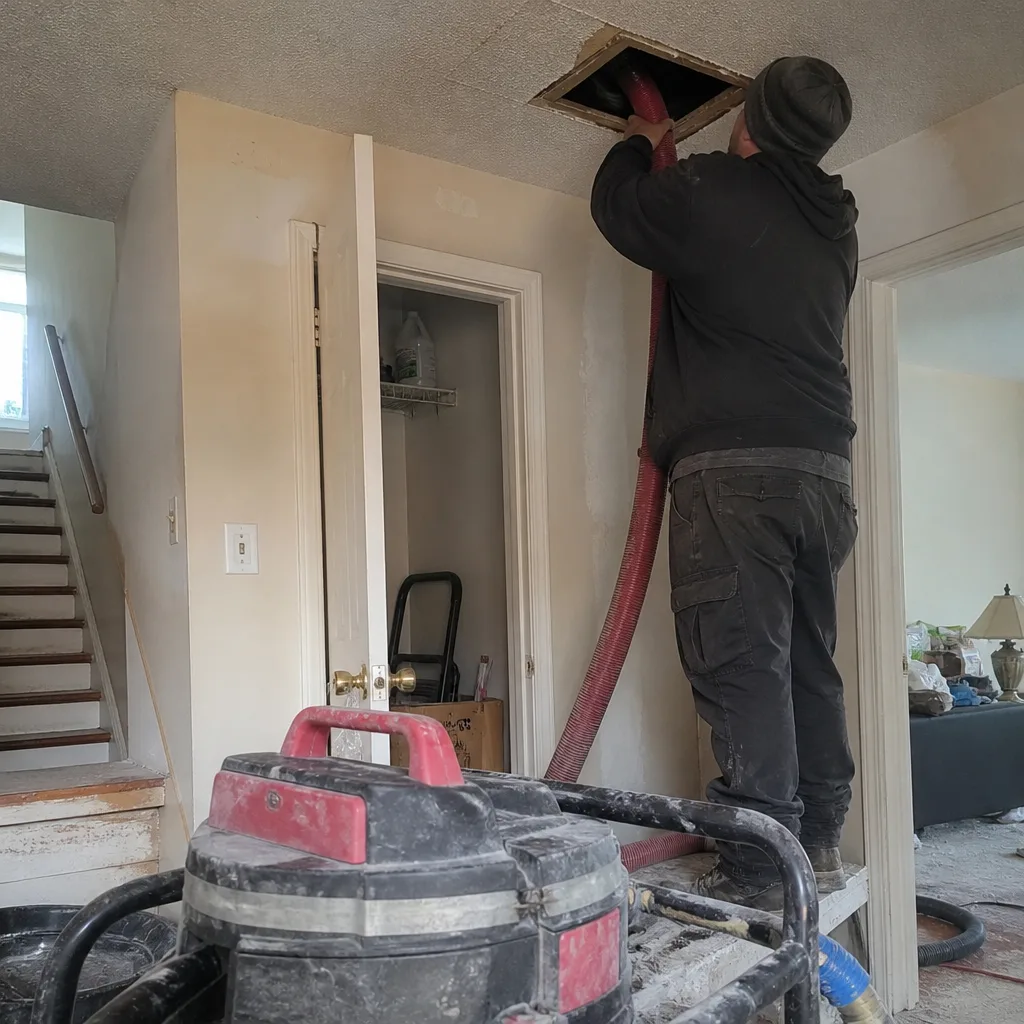 Before
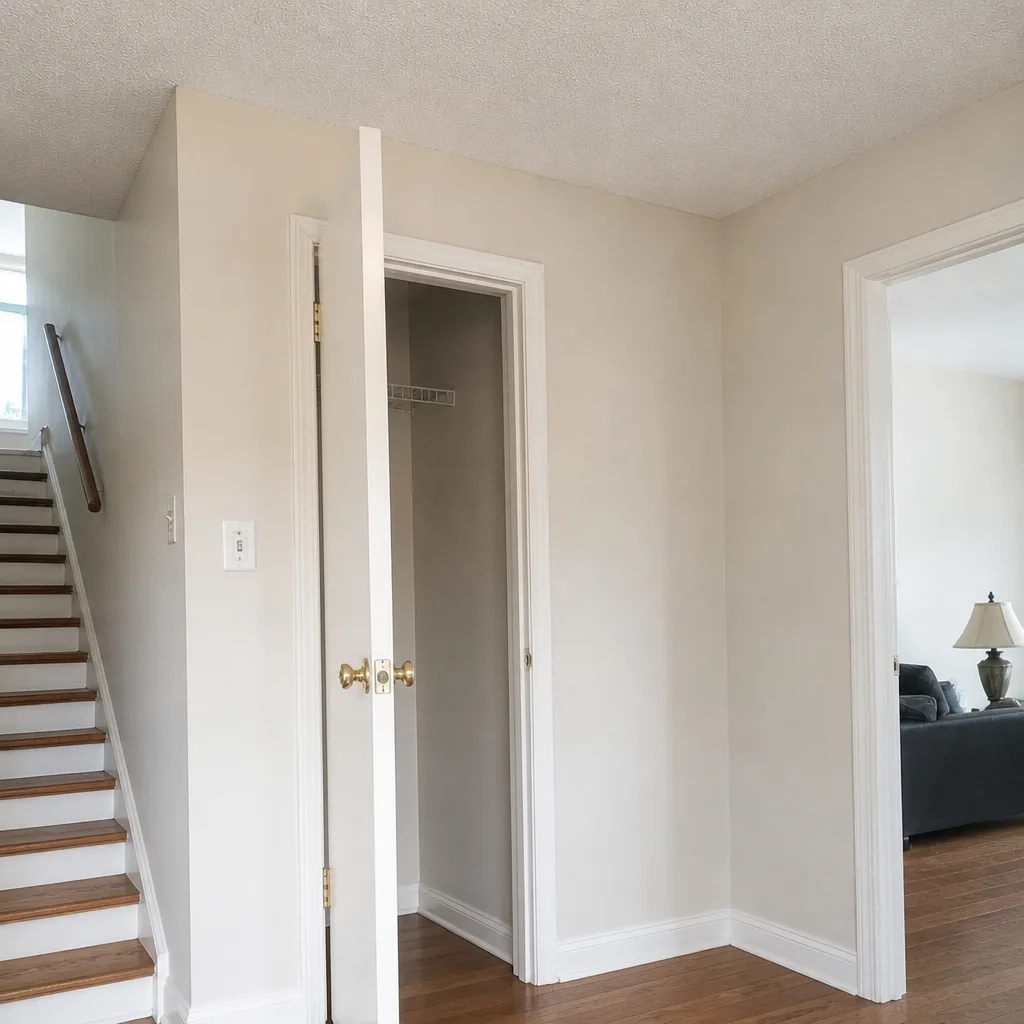 After
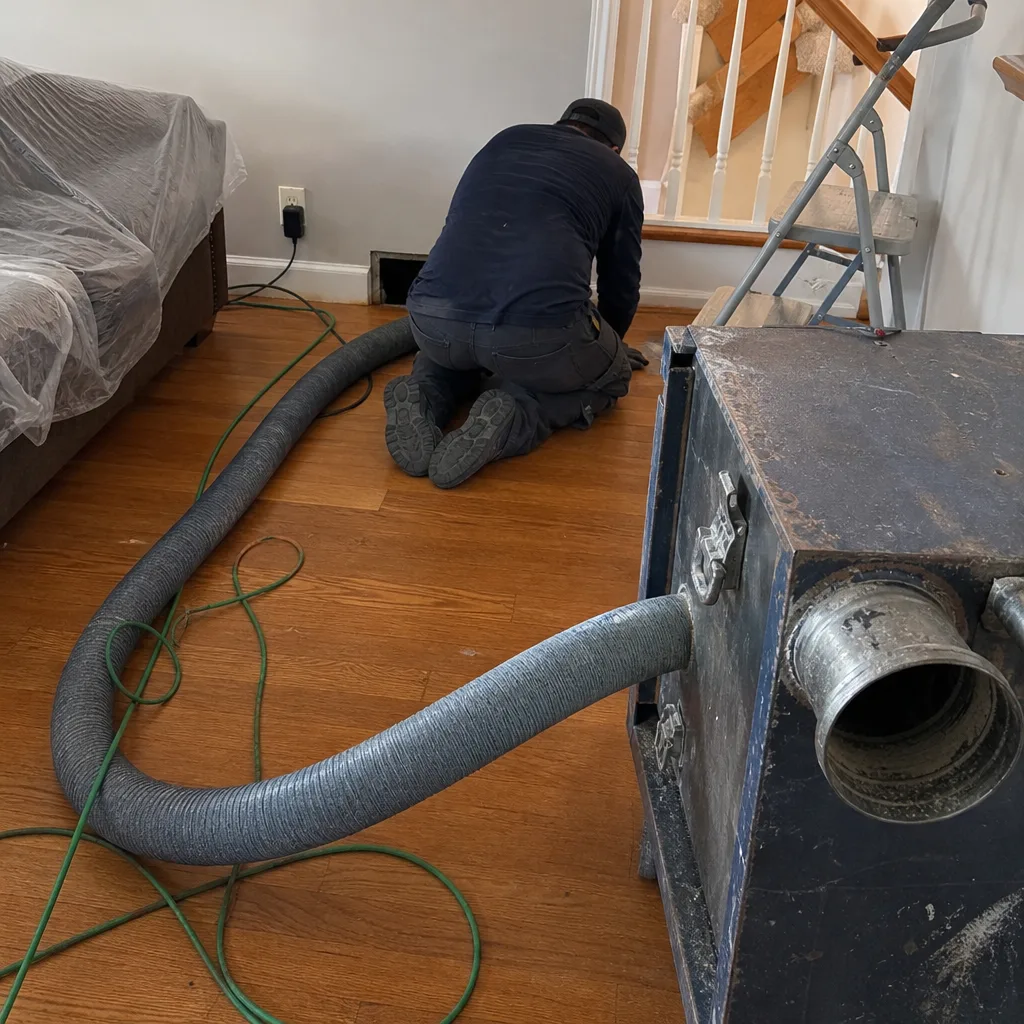 Before
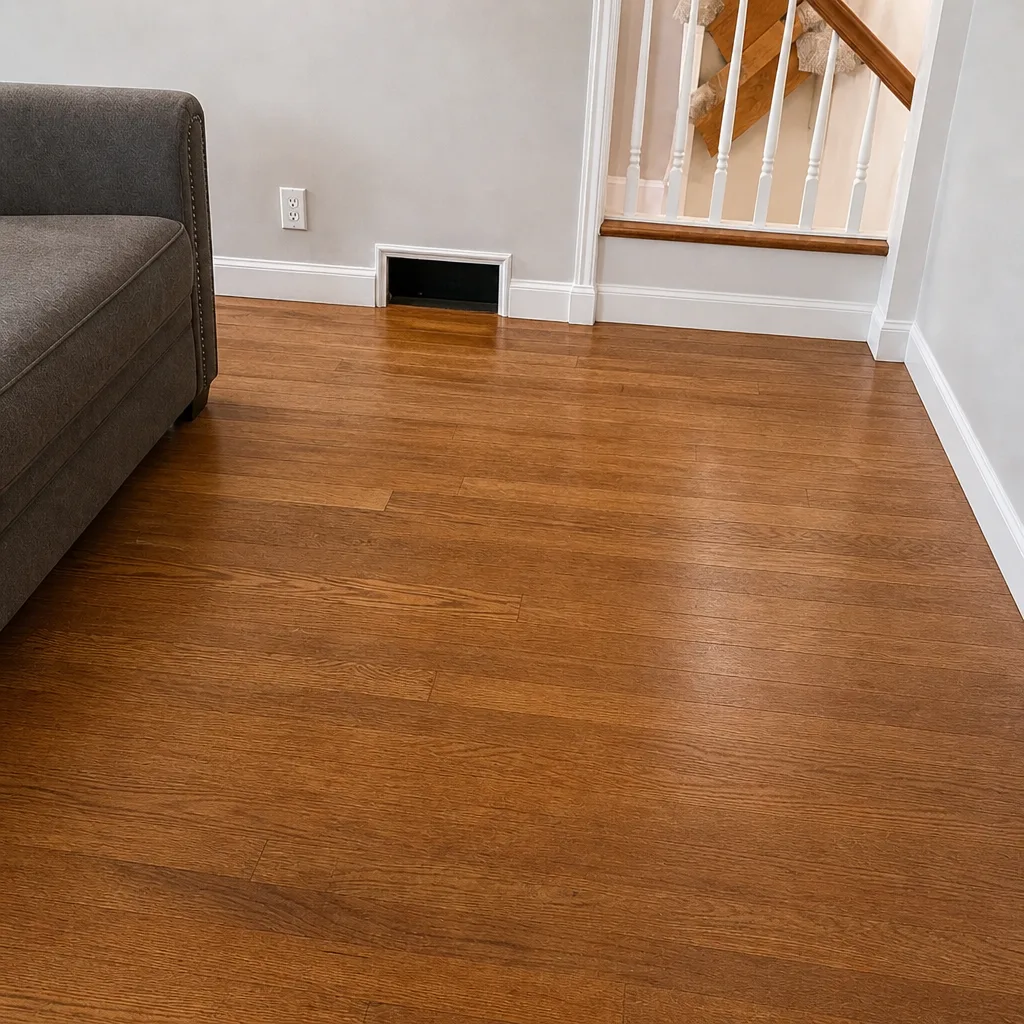 After
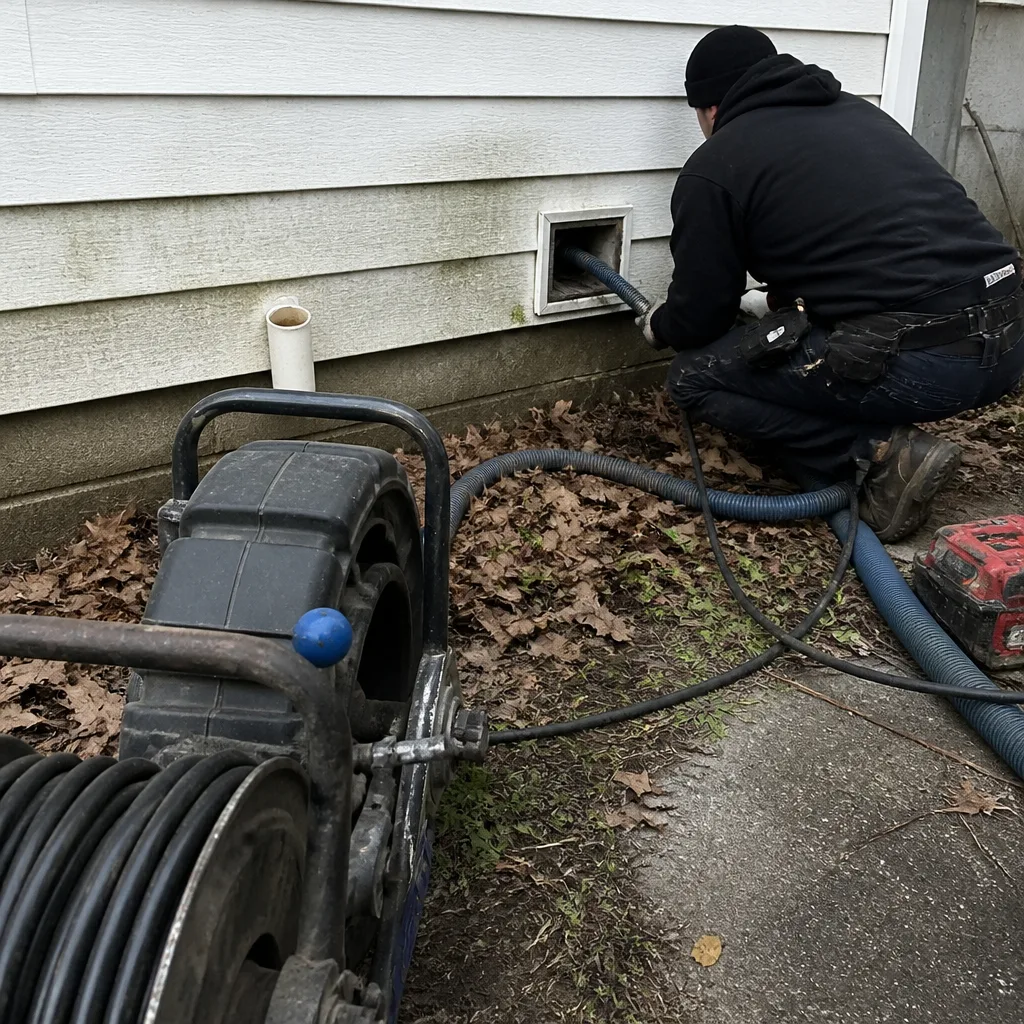 Before
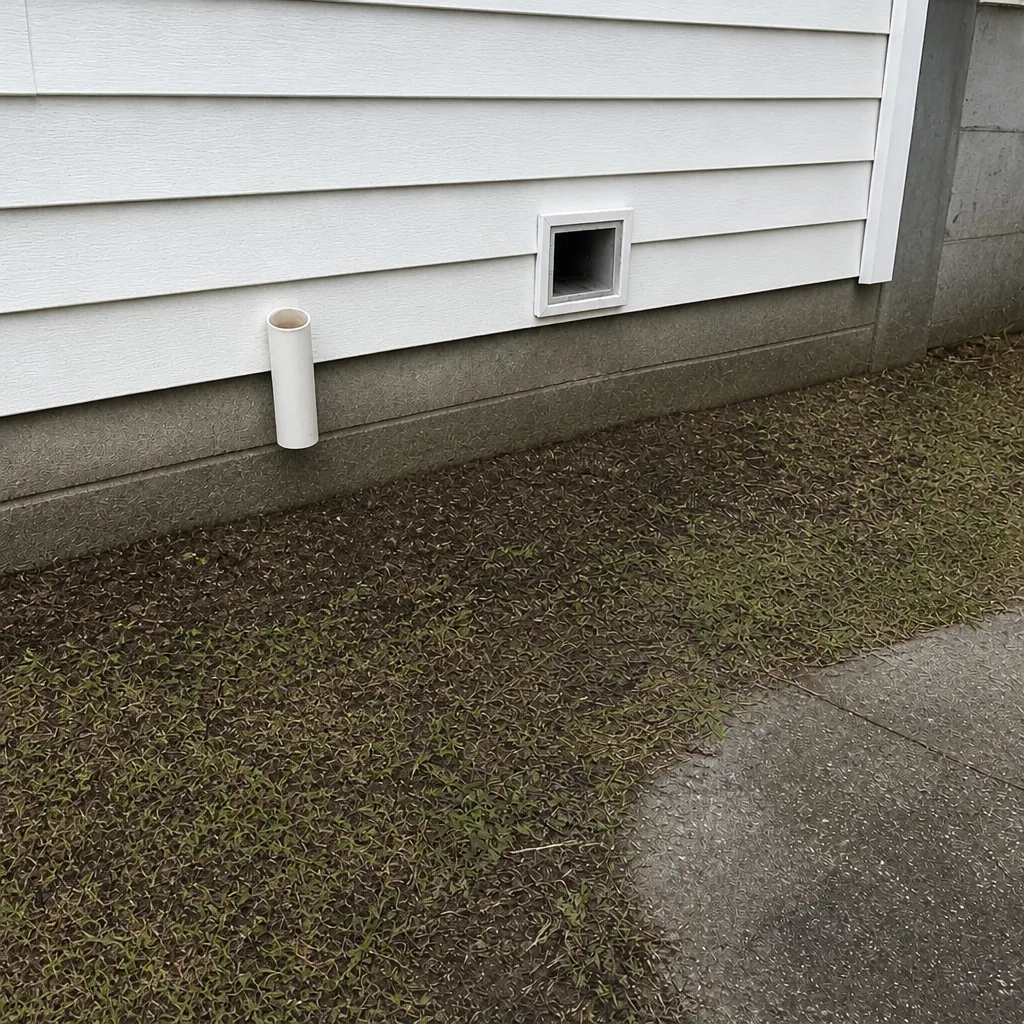 After
Frequently Asked Questions
Most Chesapeake homes fall between $350 and $900 for a full-system clean in 2026, depending on square footage, number of runs, and whether the ducts are in an attic or a crawl space. Anything materially below $200 for a whole house almost always indicates a vacuum-only job with no containment. Call (855) 695-8132 for an exact quote; estimates are free.
Because they’re not quoting the same service. A low quote usually covers a shop-vac pass that agitates surface dust without negative-air containment, access-point cleaning, or return-duct work. The equipment difference alone explains most of the price spread. Call (855) 695-8132 and we’ll walk through what’s actually included in a professional whole-system quote.
Ask for before-and-after photos of your own ductwork, taken during the visit, and for a written scope listing what was cleaned and how. A contractor who won’t document the job likely can’t show a meaningful difference. Ask about documentation up front, and expect it as part of the estimate. Call (855) 695-8132 with questions about what to expect on a Chesapeake job.
Most homes don’t need annual cleaning. Every 3 to 5 years is a reasonable cadence for a home with normal dust load and pets, or sooner after a renovation, a move into a home with original uncleaned ductwork, or an indoor air-quality concern. A contractor who recommends annual cleaning for every home is overselling. Call (855) 695-8132 to discuss whether your Chesapeake home fits a routine cadence or a one-time deep clean.
Reducing settled dust and debris in the duct system reduces the material that gets stirred into the airstream when the blower kicks on. For families dealing with allergies or asthma, that’s one meaningful piece of the picture. Duct cleaning isn’t a medical treatment; it’s part of an indoor-air strategy that includes proper filtration and, where warranted, an IAQ system upgrade. Call (855) 695-8132 with questions about what your system needs.
It’s a genuine safety service. Lint buildup in a vent run traps heat near the dryer and is a documented fire risk, and the NFPA identifies dryer vents as a leading cause of residential fire incidents. It’s worth doing on a regular cadence even if the ducts are clean. Call (855) 695-8132 to schedule or to bundle it with a duct cleaning visit.
The Bottom Line
The $99 ad and the $900 specialist quote aren’t describing the same job. One is a vacuum pass that leaves settled debris in place and redistributes dust during the visit. The other includes negative-air containment, rotary brush agitation, access-point creation and sealing, blower and coil inspection, documentation, and a written price before work starts. For a Chesapeake homeowner, the useful comparison isn’t per-vent cost; it’s what’s actually included. Expect $350 to $550 for a standard single-story home and $550 to $900 for a two-story or crawl-space system. Ask about equipment, access points, containment, and documentation before you book, and treat any per-vent number without those four answers as noise. That’s how Chesapeake homeowners stop pricing blind and start pricing on the facts.
Get a Free Estimate in Chesapeake
If you’ve read this far, you already know what separates a real duct cleaning job from a cheap one. The next step is a quote you can compare on the same criteria. Duct Cleaning Chesapeake offers three services: air duct cleaning, dryer vent cleaning, and duct repair, all handled by one crew using professional-grade equipment from Rotobrush and Nikro, with Abatement Technologies filtration on-site to keep debris contained. Our technicians have up to 11 years of experience, and we service Honeywell and Aprilaire indoor-air-quality systems as part of a complete air-system approach. The price is set per system in a written estimate before work starts, and you receive before-and-after photos of your own ducts. Call (855) 695-8132 for a free estimate. We answer 24/7. Fast dispatch from 7am to 7pm, Sunday through Friday.
Written by the team at Duct Cleaning Chesapeake.