
Last updated November 16, 2026
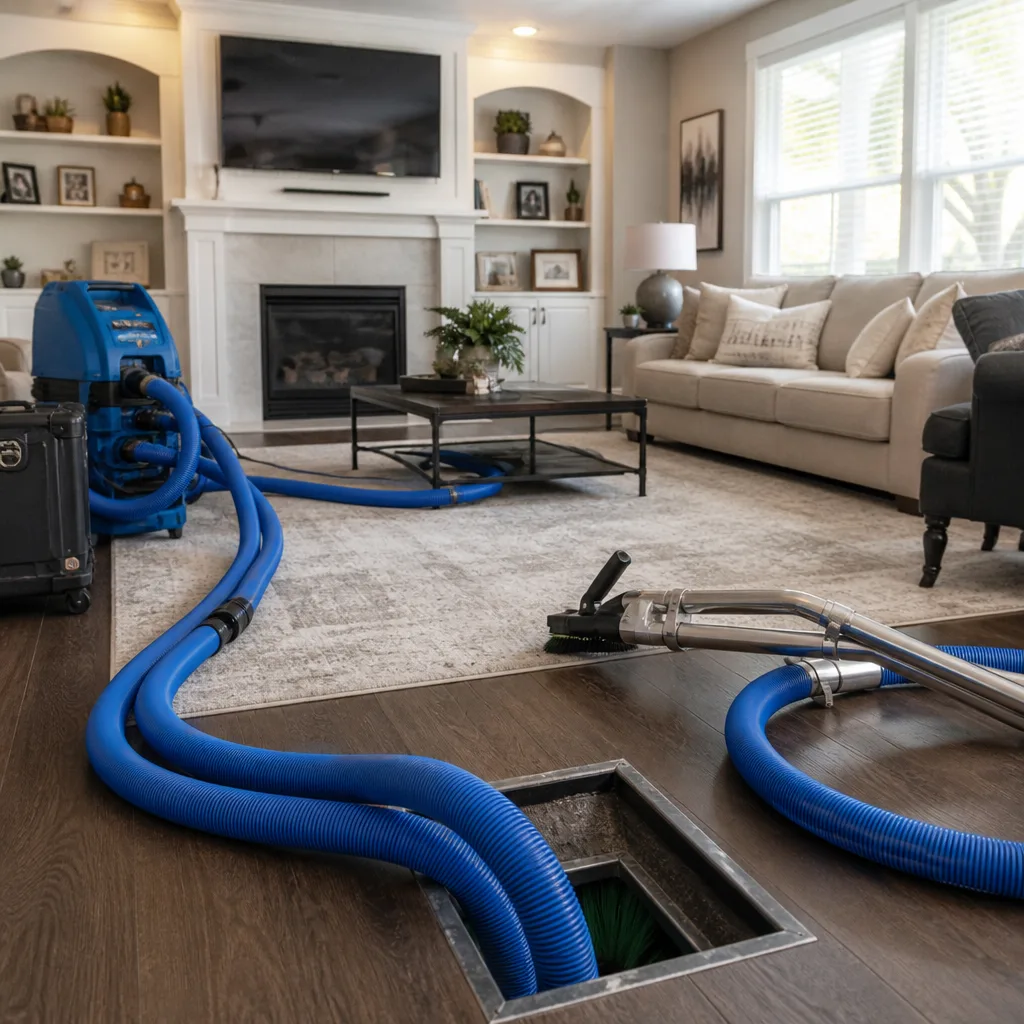 Whole-home duct cleaning
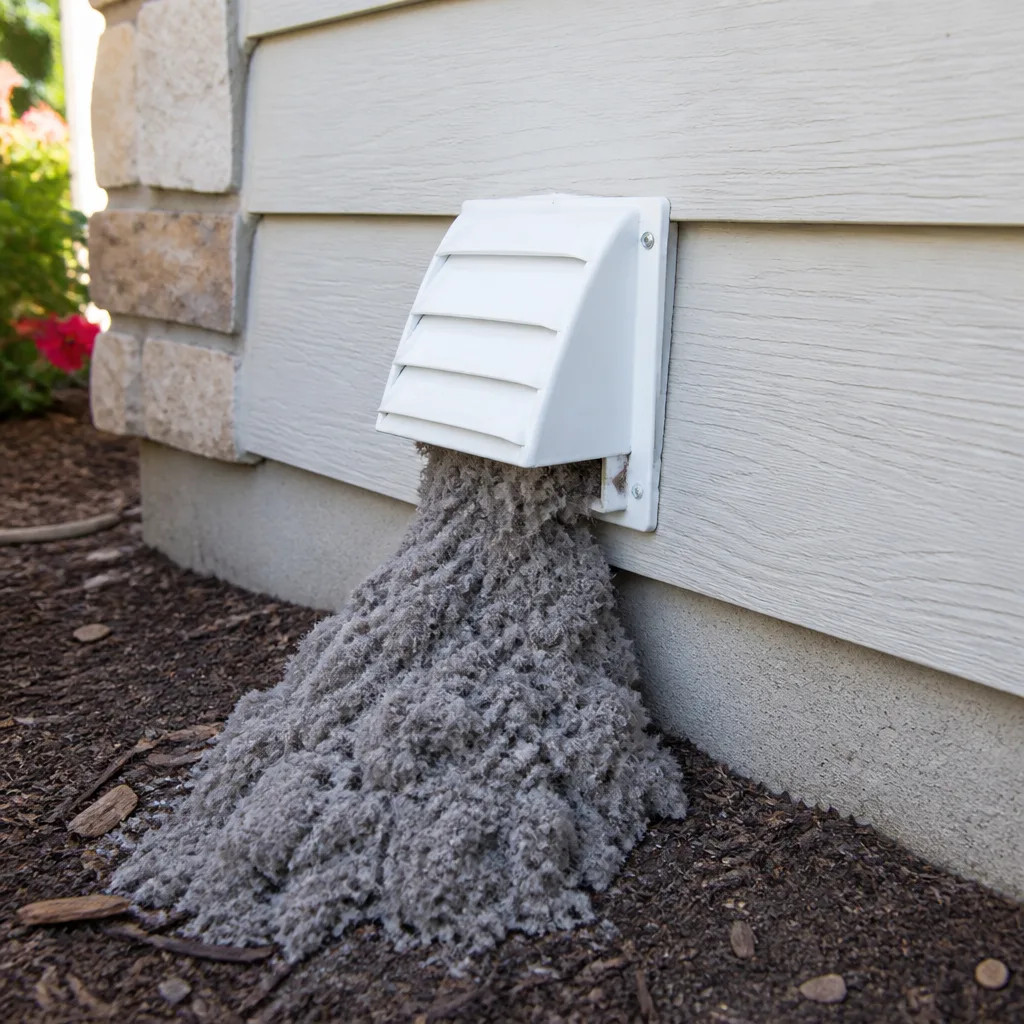 Dryer vent cleaning
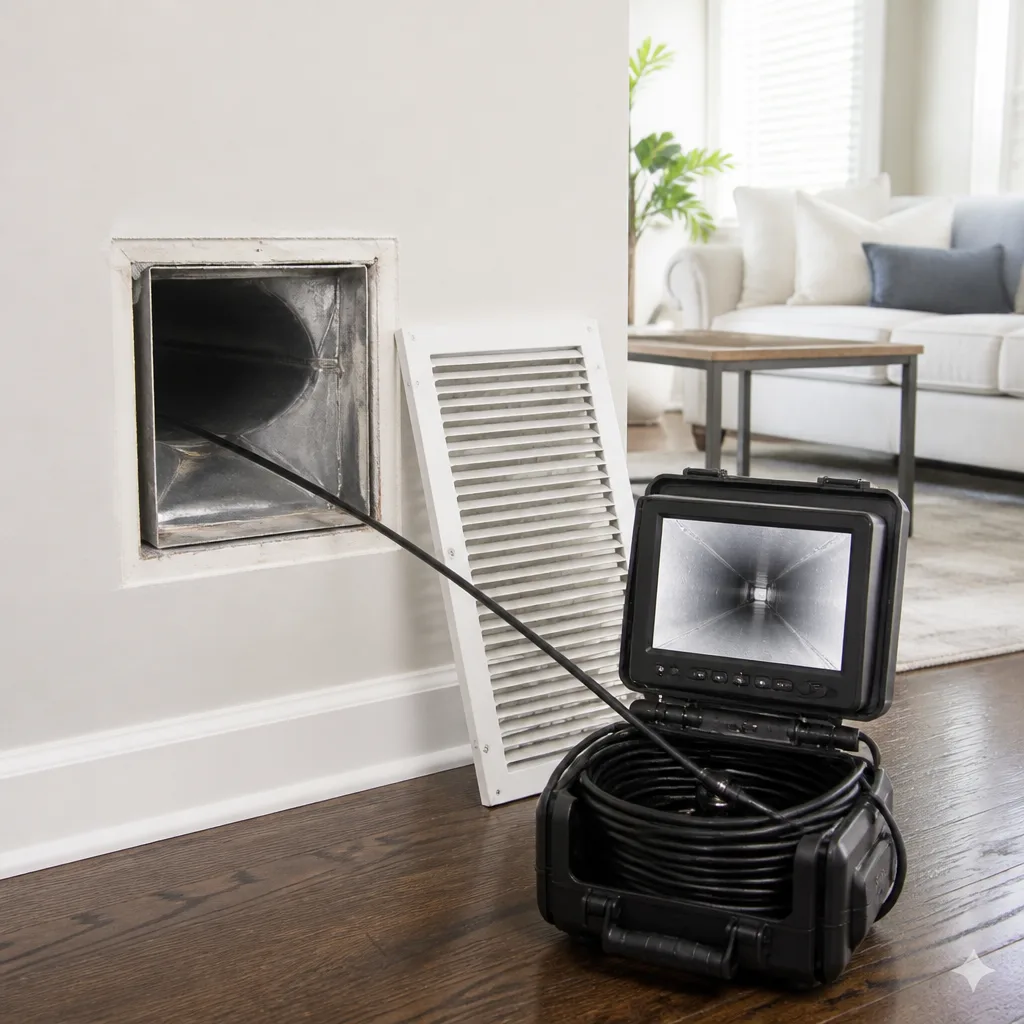 Camera inspection
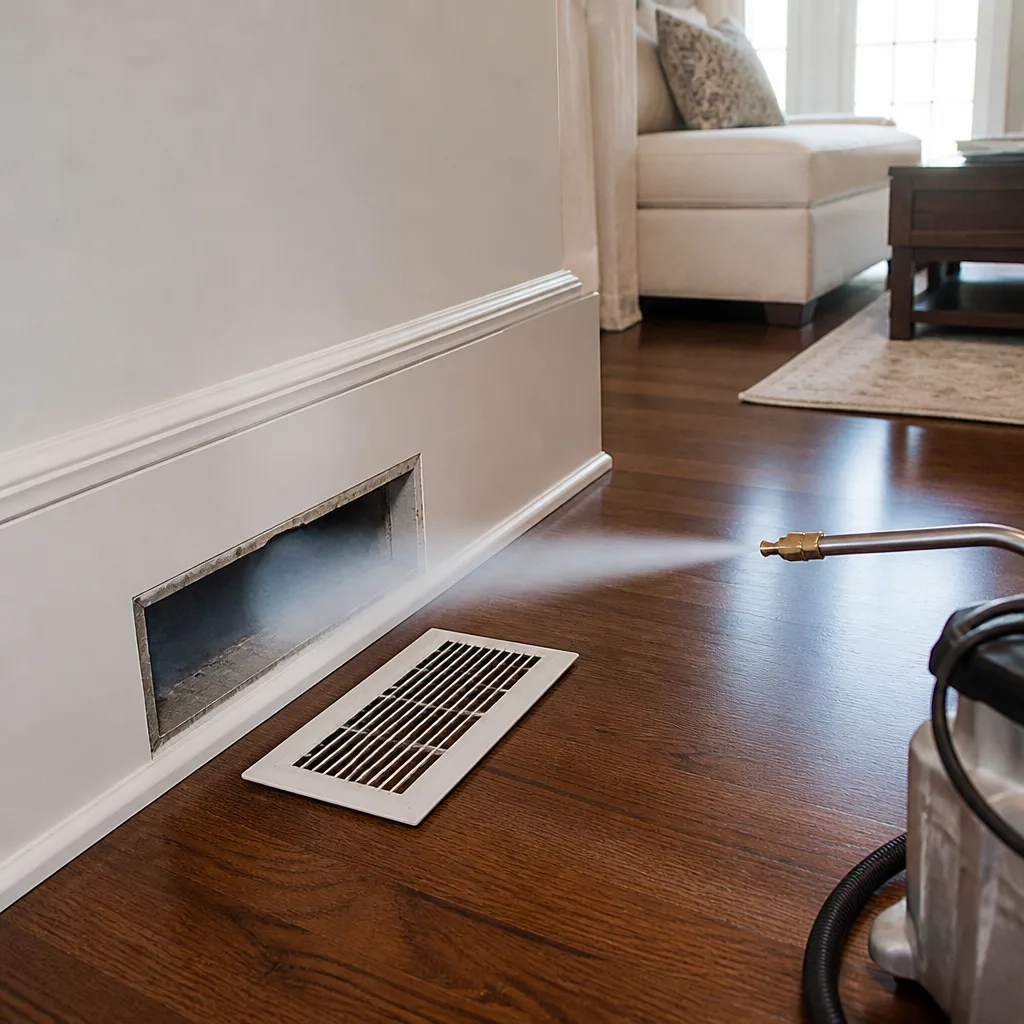 Sanitizing & deodorizing
Whole-system duct and dryer vent check with before-and-after photos - you see exactly what came out of your vents
That "$99 whole-house special" is a bait ad - the real number appears once they are in your hallway, or the "clean" is a shop-vac at the register. We photograph the inside of your ducts before and after instead.
Air Duct Cleaning Warning Signs: A Chesapeake Homeowner’s Reference Guide
Dust settling back onto the coffee table two days after you wiped it down usually isn’t a housekeeping failure. It’s a supply register telling you which stretch of your duct system is shedding debris every time the blower runs. Homeowners in Chesapeake tend to write off the clues their air system gives them as “just how old houses behave,” when those clues are actually diagnostic. This guide translates the symptoms into causes, separates the signs that mean schedule a cleaning from the ones that mean stop running the system, and gives you a triage you can act on today.
Quick Answer
Air duct cleaning warning signs are persistent dust reaccumulation within a couple of days of cleaning, musty or sour odors at supply registers, rooms that never match the thermostat, and visible debris or dark streaking inside the grilles. In Chesapeake, homes with crawl spaces, older flex duct, and humid basements show these signs earlier than most. One or two mild signs means book a cleaning soon; visible mold, pest evidence, or collapsed duct means stop and get an inspection before anyone cleans.
Styles & brands we work with
- Whole-home duct cleaning
- Dryer vent cleaning
- Camera inspection
- Sanitizing & deodorizing
Table of Contents
- The Symptom-to-Cause Map
- Warning Signs That Need Cleaning vs. Signs That Need Inspection
- Why Chesapeake Homes Show These Signs First
- Health Symptom Patterns and What They Actually Tell You
- Severity Triage: Schedule Soon, Call Today, or Emergency
- What Proper Cleaning Actually Looks Like
- Common Mistakes to Avoid
- Frequently Asked Questions
The Symptom-to-Cause Map
A duct system doesn’t fail silently. It fails by leaving evidence on your furniture, your grilles, and your nose. The trick is knowing which symptom points to contamination and which points to an airflow or mechanical fault, because the two call for different work.
Rapid dust reaccumulation
Dust returning to horizontal surfaces within roughly 48 hours of a full clean points to debris that is still inside the system and still being pushed out. The supply register in that room marks the trunk or branch that is shedding. Pay attention to which rooms come back dusty first, because that pattern narrows the problem to a zone rather than the whole house.
Musty odors at supply registers
A sour or damp smell that gets stronger when the blower kicks on is a sign of organic growth or standing moisture somewhere in the run, often in the duct liner or the last stretch of flex before the register. Odor that follows the system into every room suggests contamination in the trunk line, not just one branch.
Uneven room temperatures
One room that never reaches the thermostat setting, or a room that runs hot while the rest runs cold, points to restricted airflow. That restriction can come from a heavy debris load, a crushed flex run, or a disconnected joint bleeding conditioned air into the crawl space instead of into the room. Temperature complaints alone aren’t proof of contamination, but combined with a dusty register they usually are.
Visible debris and dark streaking at supply grilles
Pull a register cover and look inside with a flashlight. A light film of dust is normal. A visible mat of debris, dark staining along the duct wall, or debris stuck to the grille vanes means the system is carrying material it should not be carrying. Streaking around a register usually means air is escaping at the seam too.
Weak airflow at distant registers
Registers that used to blow strong and now feel soft, especially the ones furthest from the air handler, often mean the duct has lost cross-section through debris buildup, sagging flex, or a partially closed damper. It can also mean a collapsed inner liner on insulated flex duct, which is a repair, not a cleaning.
Each of these signs is worth reading on its own, but the pattern matters more than any single clue. Three rooms that turn dusty in the same order every time tell you more than one dusty room you happened to notice. When the pattern points to contamination across multiple zones, our air duct cleaning service addresses the whole system rather than treating one register.
Warning Signs That Need Cleaning vs. Signs That Need Inspection
This is where most homeowners get steered wrong. Not every warning sign means “clean the ducts.” Some mean “inspect before anyone touches the system,” and cleaning a contaminated or damaged system before the underlying problem is diagnosed can make things worse.
Signs that usually call for cleaning
- Dust returning to surfaces within days of a clean
- A dull, dusty smell that intensifies when the blower runs
- A visible light-to-moderate layer of debris inside the duct near the registers
- Recently completed renovation work that left drywall dust in the air for weeks
- A recent home purchase where the previous owner’s maintenance history is unknown
Signs that call for inspection first
- Visible mold growth inside the duct or on the register face
- Pest evidence: droppings, nesting material, gnaw marks on flex duct or insulation
- Duct collapse: a crushed or flattened run, or an inner liner that has come loose from the outer jacket
- Persistent moisture, standing water in the crawl space, or condensation on duct runs
- A gas or combustion smell, which is never a duct-cleaning issue and needs a qualified technician
Mold and pest problems need to be resolved at the source before cleaning, or the contamination returns to a system that’s been vacuumed but not fixed. Duct collapse is a repair, not a cleaning job. In our experience, the most expensive mistakes happen when a homeowner books a cleaning to solve a problem that was never a cleaning problem.
A professional assessment distinguishes the two before any equipment comes in. If the inspection turns up leaks, disconnected joints, or damaged runs, air duct repair gets the system sealed before cleaning so the work doesn’t have to be repeated.
Why Chesapeake Homes Show These Signs First
Chesapeake sits in the humid coastal-plain zone of southeastern Virginia, where summer dew points climb into the seventies and the air is heavy with moisture for months. That climate is hard on duct systems, and it’s why the same house that stays clean in a dry part of the country can develop musty ducts here.
Crawl spaces and humidity
Many Chesapeake homes are built over a vented crawl space, and that crawl space is where a good share of the ductwork lives. In a humid summer, an unsealed duct run in a damp crawl space sweats, and sweat plus dust equals a place for organic growth to take hold. If the crawl space has standing moisture or the vapor barrier is torn, the ducts are sitting in a condition that guarantees problems sooner rather than later.
Older flex duct systems
Flex duct is common in this area’s housing stock, and it’s the duct type most prone to sagging, crushed runs, and inner-liner separation. The inner liner on an older flex run can come loose and partially block airflow, which shows up as a weak register long before anyone thinks to look inside the duct. When the liner tears, it also traps dust and moisture, which is why old flex runs often run musty.
High-humidity basements
Homes with conditioned basements along the Chesapeake waterfront neighborhoods and the inland subdivisions both see the same pattern: a slightly damp basement, a duct system running through it, and registers that smell like a wet basement every summer. The fix starts with controlling the moisture and confirming the ducts aren’t contributing to it.
Renovation dust
Chesapeake has seen steady renovation and new-construction activity, and every major remodel pushes drywall dust, sawdust, and insulation fibers into the return side of the system. A home that had a kitchen gutted or an addition framed will almost always show dusty registers within weeks unless the ducts are cleaned afterward. Same goes for a recently purchased home where the prior owner’s routine is a mystery.
Local climate factors don’t work alone. A house in a Chesapeake neighborhood near Great Bridge Lake or along the Deep Creek corridor faces the same seasonal humidity push as one in Greenbrier or Western Branch, and the signs show up on the same calendar: late spring when the AC first runs hard, and late summer when the moisture has had months to settle in.
Health Symptom Patterns and What They Actually Tell You
A worsening allergy pattern that lines up with the heating or cooling season is a meaningful clue, but it’s easy to misread. The question worth asking is whether symptoms track with the system running, not just with the time of year.
When symptoms correlate to the system
- Congestion, sneezing, or eye irritation that starts within an hour of the system kicking on
- Symptoms that ease when you’re out of the house for a stretch and return when you’re home
- A pattern that follows the rooms where the registers are dustiest
- Irritation that gets worse in the first cool weeks of fall when the heat runs for the first time
The system-running correlation is the signal. Seasonal allergies tend to follow what’s happening outside. Symptoms that follow the blower cycle are more likely tied to what’s coming out of the registers, whether that’s dust, debris, or something growing in a damp run.
When the cause is probably something else
Some indoor air complaints have nothing to do with duct contamination, and it’s worth being honest about that. New carpet, new furniture, paint and finishes during a renovation, a pet, a bathroom without a working exhaust fan, and high indoor humidity can all drive symptoms that look like duct problems. A home with a strong mold smell in one room but clean registers points elsewhere.
It’s also worth knowing what a duct cleaning can and can’t do. Cleaning removes accumulated debris that the system has been re-circulating. It doesn’t sterilize the air, and it won’t fix a moisture problem that’s feeding growth in the walls or crawl space. For homes with families concerned about asthma or allergies, the honest guidance is to pair a cleaning with humidity control and filtration review, because the cleaning handles the debris and the rest handles the moisture.
For homes that already have whole-home air quality equipment, the ducts and the air quality system work together. We service Honeywell and Aprilaire indoor-air-quality components as part of a broader approach, because a cleaned duct system feeding a neglected filter or humidifier is only half the job.
Severity Triage: Schedule Soon, Call Today, or Emergency
Most warning signs are not emergencies, and treating them like one leads to rushed decisions. But a few signs genuinely can’t wait. Here’s a triage you can use to decide how fast to act.
Schedule soon (within the next few weeks)
- Dust returning to surfaces within a few days to a week
- A musty smell at one or two registers that doesn’t dominate the house
- A single room that runs a few degrees off from the rest
- A recent renovation or a recent home purchase with no maintenance history
- Visible dust inside a register but no mold, pest, or moisture evidence
Call today
- A strong, persistent musty or sour smell that fills the house when the system runs
- Multiple rooms that now feel weak at the registers
- A visible mat of debris blocking a register or return
- Condensation on duct surfaces or a damp smell coming directly from the crawl space into a room
- A dryer that’s taking longer to dry clothes, which is a separate but serious warning sign (see below)
Emergency (stop and act now)
- Any smell of gas or exhaust from the HVAC system; turn off the system and call a qualified technician
- Visible mold growth inside the duct accompanied by symptoms in the household
- A dryer vent that’s clogged so badly the dryer overheats or the vent hood flap stays closed
- A duct run that has fully come apart and is discharging air into a crawl space or attic
Dryer vent problems sit in a category of their own because the stakes are different. A clogged dryer vent is a documented fire hazard, and a dryer taking two cycles to dry a load or a vent hood flap that doesn’t open when the dryer runs are signs that don’t get to wait a few weeks. Our dryer vent cleaning is a standalone safety service for exactly this reason, and it’s not an upsell tacked onto duct work.
For everything in the “call today” or emergency column, the first move is to stop running the system if there’s a smell or visible mold, then call. We answer 24/7. Fast dispatch from 7am to 7pm.
What Proper Cleaning Actually Looks Like
Knowing the warning signs is only half the equation. The other half is recognizing whether the work that follows actually addresses them, because a cleaning done with the wrong equipment leaves the same signs in place and takes your money with it.
The equipment question
Professional duct cleaning is done with a rotary-brush system and a high-capacity negative-air machine working at the same time. The brush loosens debris from the duct walls while the negative-air unit pulls it out of the system and into a filtered collection point rather than into your living room. The equipment names matter because they tell you what kind of job you’re getting. We use Rotobrush rotary-brush systems and Nikro negative-air machines, the same class of equipment used in commercial and restoration work rather than entry-level residential vacuums. We also use Abatement Technologies air-filtration systems on-site to contain particulates during the process, which matters in a house where the debris is the reason for the cleaning in the first place.
The process, step by step
- Inspect the system and confirm what’s actually happening, including whether mold, pest, or duct damage is present.
- Seal or address any leaks, disconnected joints, or damaged runs before cleaning so debris doesn’t escape into the space.
- Set up containment and negative-air filtration at the work area.
- Run the rotary brush through each branch and the main trunk, working from the far registers back toward the air handler.
- Clean registers, grilles, and the air handler’s accessible interior surfaces.
- Photograph the before-and-after condition of the ducts you can see, and go over the results with you.
What to ask before you book
- What equipment will be used, and is it a rotary-brush and negative-air setup?
- How is the work contained so debris doesn’t re-circulate?
- Will you inspect for mold, pests, and duct damage before starting?
- What does the price cover, and what’s included at that one flat price?
- Will I get before-and-after photos of my own ducts?
A company that can’t answer those questions cleanly is a company that’s going to cut corners. The signs you’ve been reading in your house deserve a process that actually removes the debris, which is why the inspection-first, contain-during, photograph-after approach exists. When you’re ready to talk it through, Duct Cleaning Chesapeake handles the inspection and the cleaning as one job.
Common Mistakes to Avoid
The most common mistakes homeowners make with duct warning signs aren’t failures of observation. They’re failures of interpretation, and in Chesapeake’s climate the cost of misreading a sign tends to compound over a summer.
- Booking a cleaning to solve a moisture problem. If the crawl space is damp or the duct is sweating, cleaning the system won’t stop the growth from returning. Fix the moisture source first, or the same musty smell comes back within a season.
- Treating a low price as a shortcut to the same result. A quote that’s dramatically below the rest is usually a vacuum-only job without containment or a proper brush system. You get a tidier-looking register and none of the debris actually removed.
- Ignoring the dryer vent because the ducts were cleaned. These are two separate systems, and cleaning ducts does nothing for a clogged dryer vent, which is a fire-safety concern in its own right.
- Assuming a recent renovation left the ducts fine. Drywall dust and construction debris settle into the return side for months. A post-renovation home in Chesapeake almost always warrants a cleaning, not an assumption.
- Cleaning a system that hasn’t been inspected. Mold, pest infestation, and collapsed flex duct have to be diagnosed before anyone starts work. Cleaning over a damaged run just spreads the problem.
- Signing off without seeing the proof. Ask for before-and-after photos of your own ducts. A company that can’t show you what was there and what’s there now is asking you to take its word for it.
- Running the system when it smells. A combustion or burning smell is never a “wait and see” sign. Shut it off and call a qualified technician right away.
See the difference
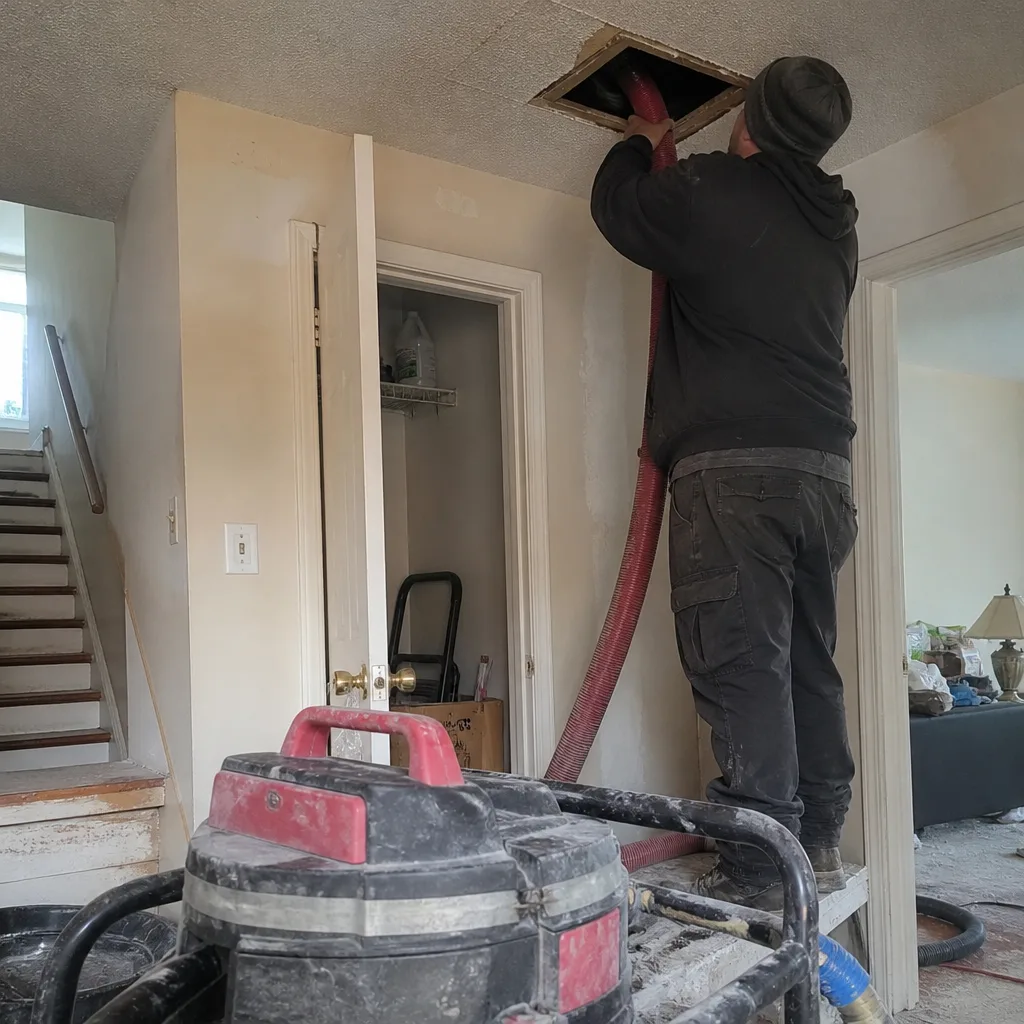 Before
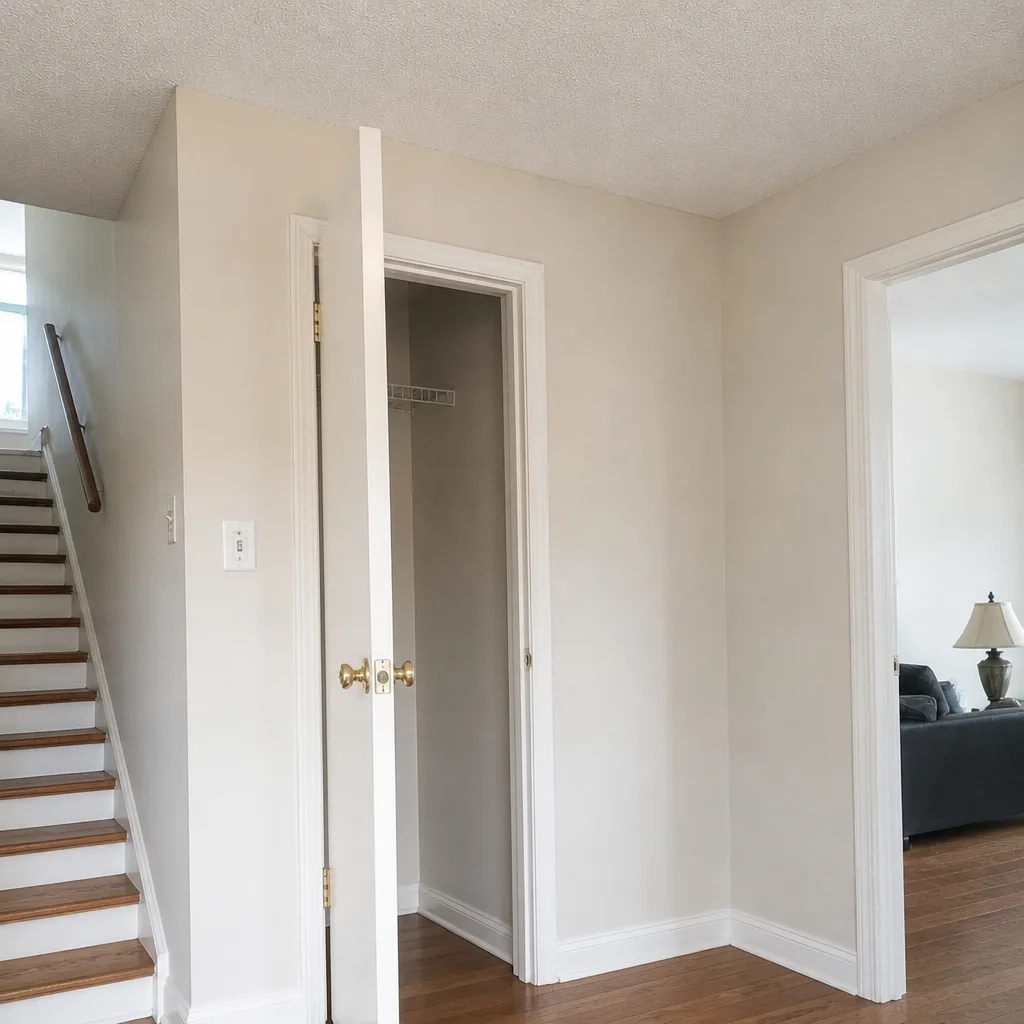 After
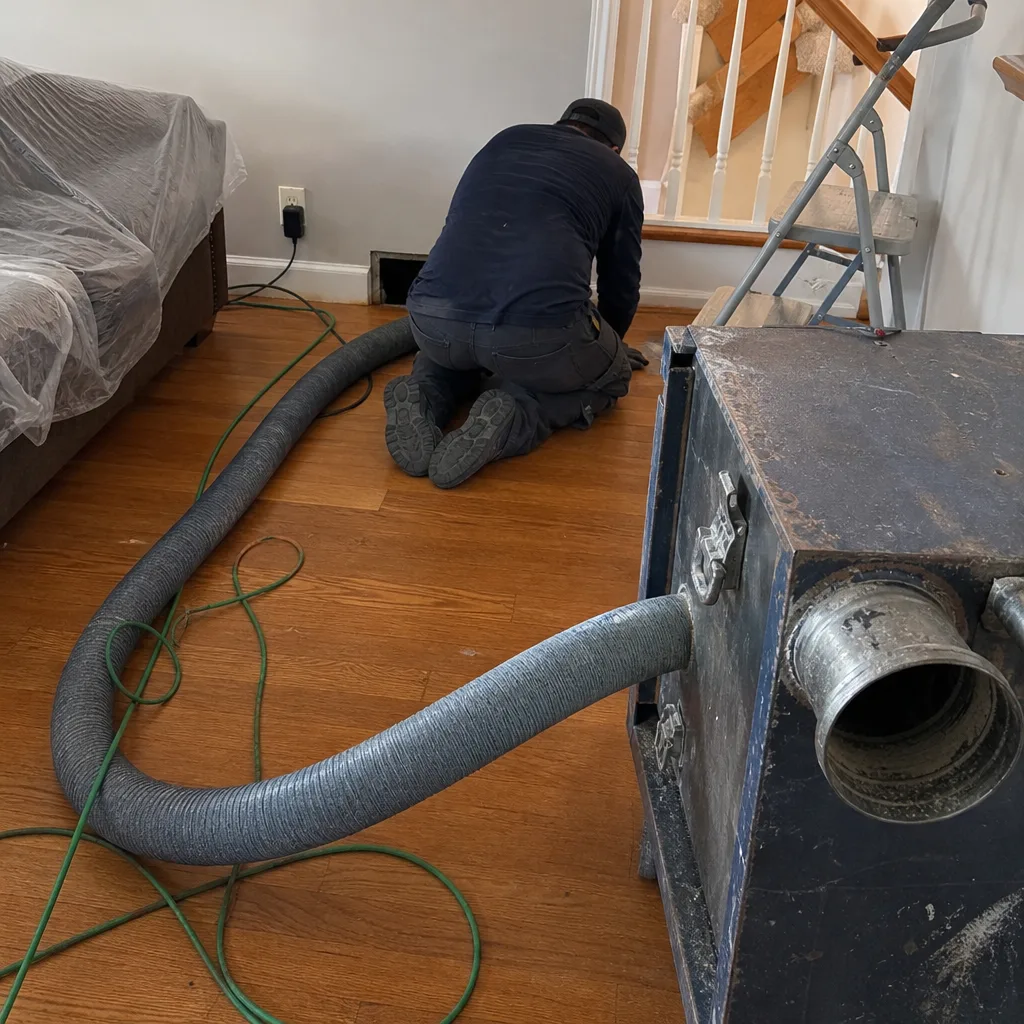 Before
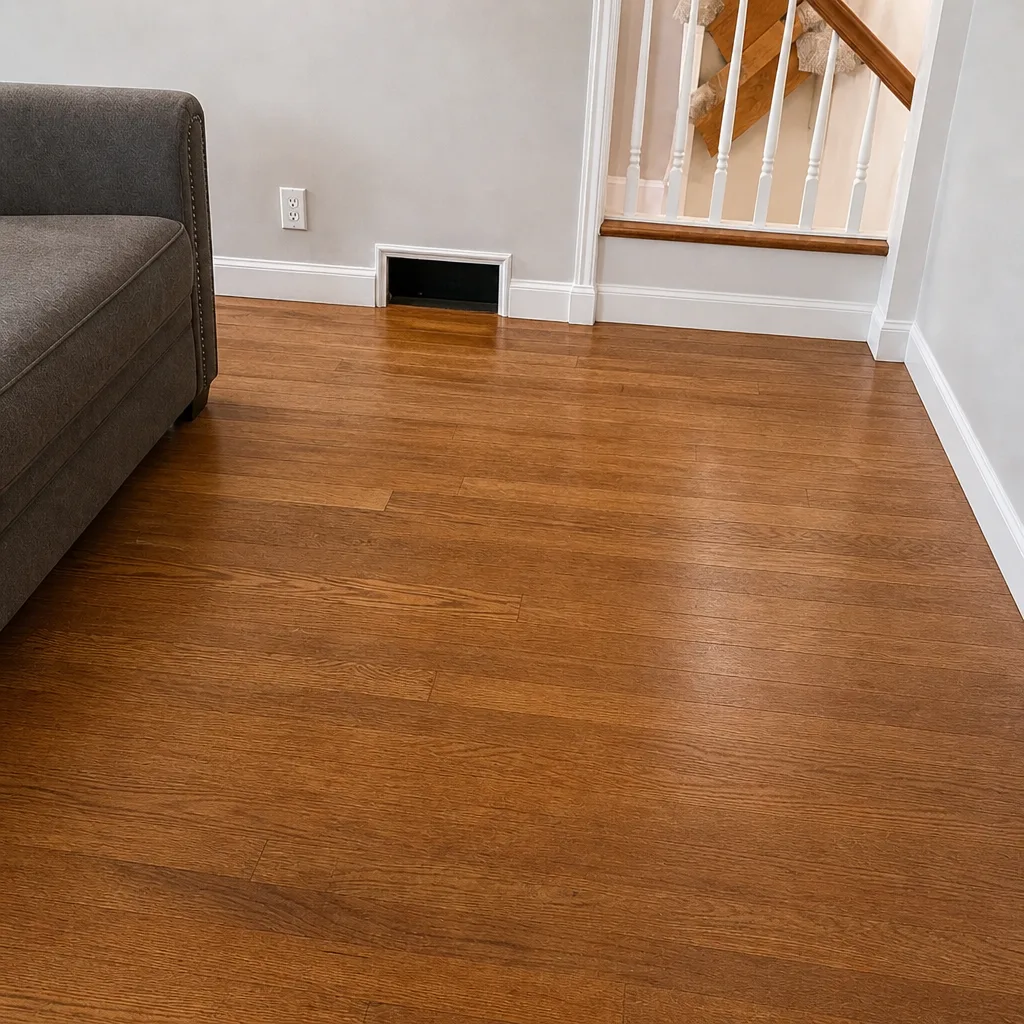 After
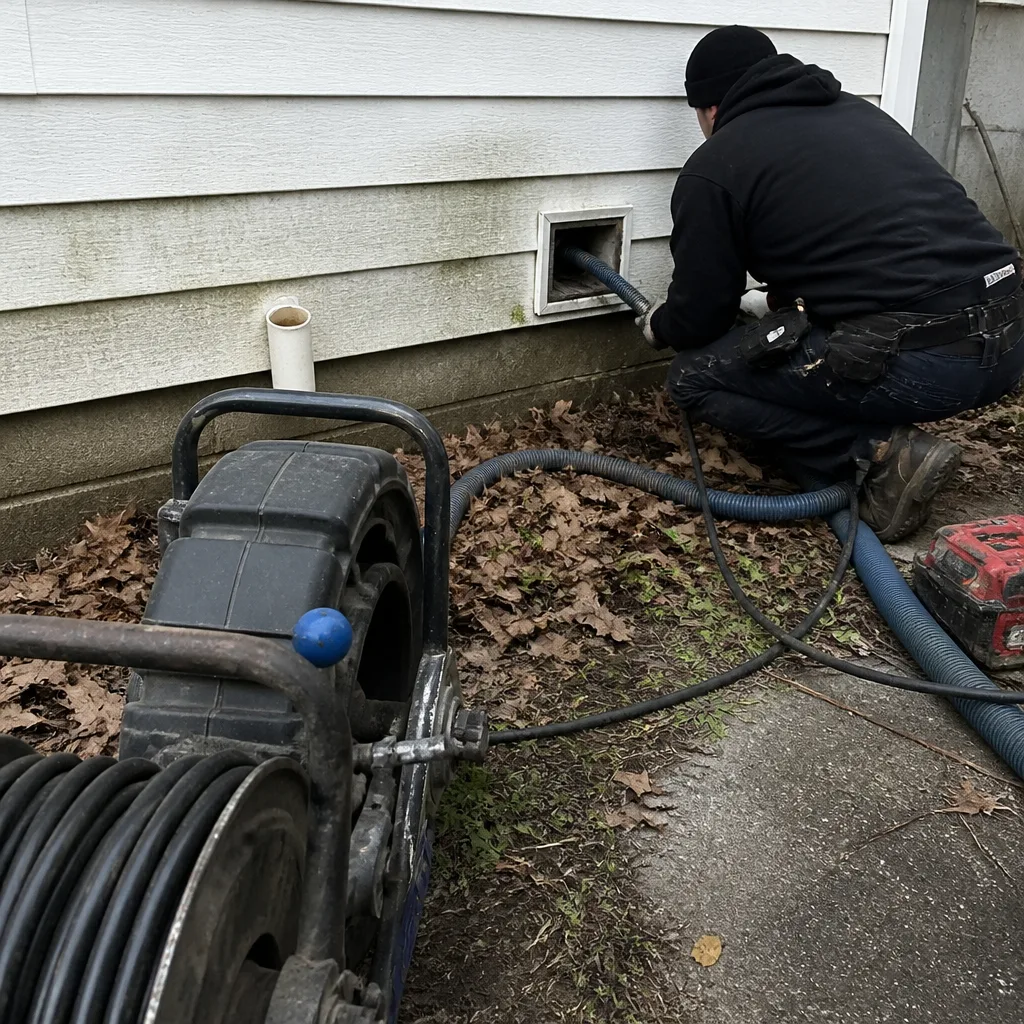 Before
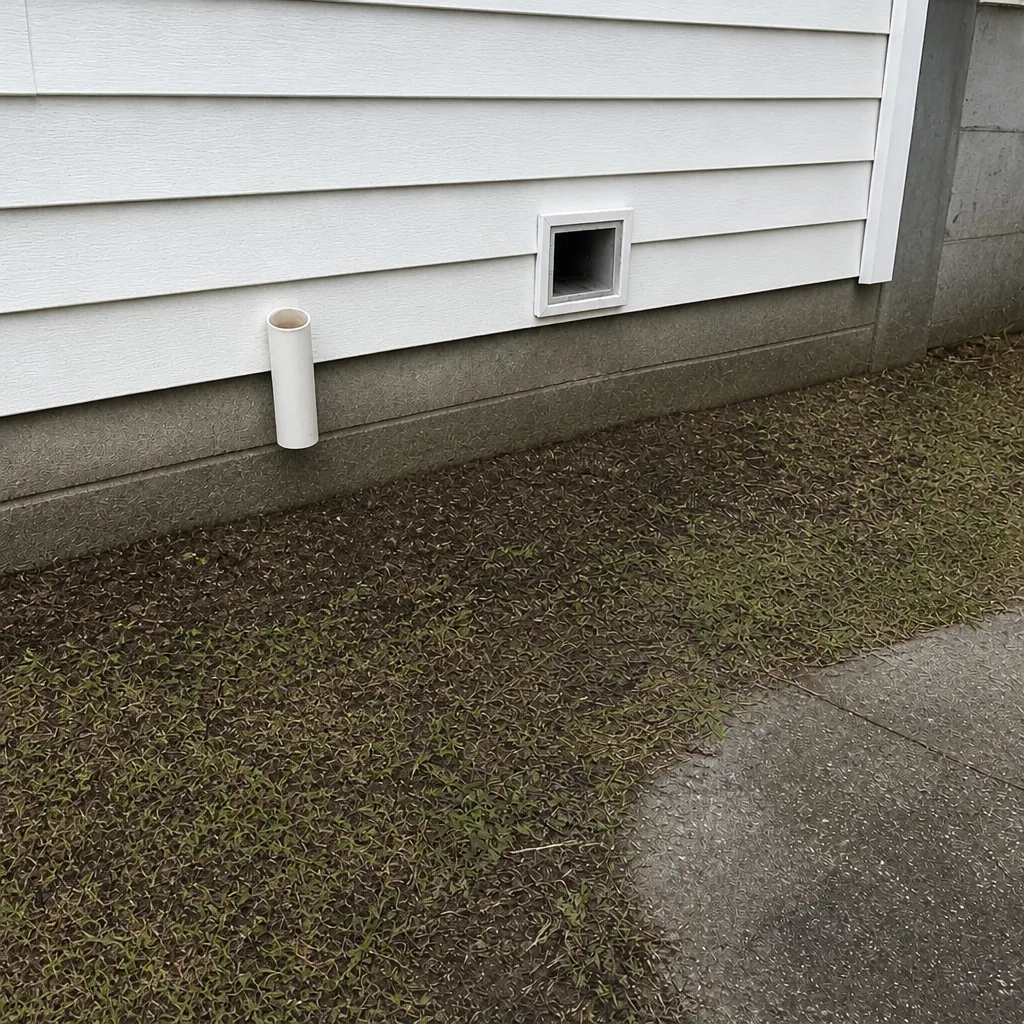 After
When to Call a Professional
Call a professional when the signs point to contamination across more than one zone, when a musty smell dominates the house, when you can see debris or mold inside a register, or when a dryer is taking longer than it used to. Call sooner if there’s a burning or gas smell, visible mold with household symptoms, or a dryer vent that’s clearly clogged. In Chesapeake, a recently purchased home, a completed renovation, or a crawl space with moisture issues are all reasons to get an assessment before assuming the system is fine.
Duct Cleaning Chesapeake offers free estimates in Chesapeake. Call (855) 695-8132. We answer 24/7, with fast dispatch from 7am to 7pm, Sunday through Friday. Estimates are free, and the price is set per job by the written estimate so there are no surprises once work begins. Our technicians have up to 11 years of experience.
Frequently Asked Questions
The earliest signs are dust returning to furniture within two to three days of cleaning, a faint musty smell at one or two registers when the blower starts, and a room that no longer heats or cools like the rest of the house. In Chesapeake, the first sign of the season usually shows up when the AC starts running hard in late spring. Call (855) 695-8132 for an exact quote, because estimates are free.
There’s no honest way to give a universal number, because cost depends on the size and layout of the system, how many zones it serves, and how much debris is inside. What you should expect is one flat price per system, agreed before work starts, with the written estimate setting the final number. A company that quotes per vent or advertises a teaser price is usually planning to change the number on-site. Call (855) 695-8132 for a free estimate.
Very low quotes usually reflect a vacuum-only job without rotary brushing, containment, or a proper negative-air machine, and often without any inspection first. What you’re paying for with a proper cleaning is the equipment and the process that actually removes debris, not a quick pass with a shop vacuum. Ask exactly what equipment is used before you book, then call (855) 695-8132 for a straightforward quote on the work.
Ask for before-and-after photos of your own ducts, taken as part of the job, so you can see what changed rather than trusting a verbal report. A company doing real work with commercial-grade equipment will show you what it found and what it removed. We photograph the ducts as part of the process, and a walk-through at the end is part of the job. Call (855) 695-8132 to set up an estimate.
Most homes don’t need a set schedule; they need a cleaning when the signs return or when a trigger event like a renovation or a home purchase creates one. In Chesapeake’s humid summers, homes with crawl spaces and older flex duct tend to show signs sooner than homes without. Watch for the pattern rather than the calendar, and call (855) 695-8132 if you’re unsure whether the signs you’re seeing justify a cleaning.
No. A musty smell can come from a damp crawl space, a wet basement, a bathroom without working exhaust, or organic growth in a single duct run, and each has a different fix. The smell tells you moisture is present; the inspection tells you where it’s coming from and whether cleaning is the right answer. Call (855) 695-8132 and we’ll assess it before recommending work. Our technicians have up to 11 years of experience with this exact problem in Chesapeake homes.
The Bottom Line
The warning signs your air system gives you are diagnostic, not cosmetic. Dust that returns within days, musty odors at the registers, rooms that never match the thermostat, and visible debris inside the grilles all point to debris and airflow problems a proper cleaning can resolve, as long as the problem is diagnosed before work starts. In Chesapeake, humid summers, crawl spaces, and older flex duct make those signs show up faster than in many other parts of the country. Read the pattern, triage honestly, and get an inspection before deciding on cleaning. When the signs point to work that’s genuinely needed, we’re one call away.
If your Chesapeake home is showing any of the signs in this guide, call (855) 695-8132 for a free estimate. We answer 24/7, with fast dispatch from 7am to 7pm, Sunday through Friday. Every job is priced by a written estimate, and before-and-after photos of your ducts come with the work. For a closer look at what we do across the area, visit Chesapeake.
Written by the team at Duct Cleaning Chesapeake.